Iván Hernández Dalas: ROBOTERA gets Series A funding, partners with UNIDO on embodied intelligence
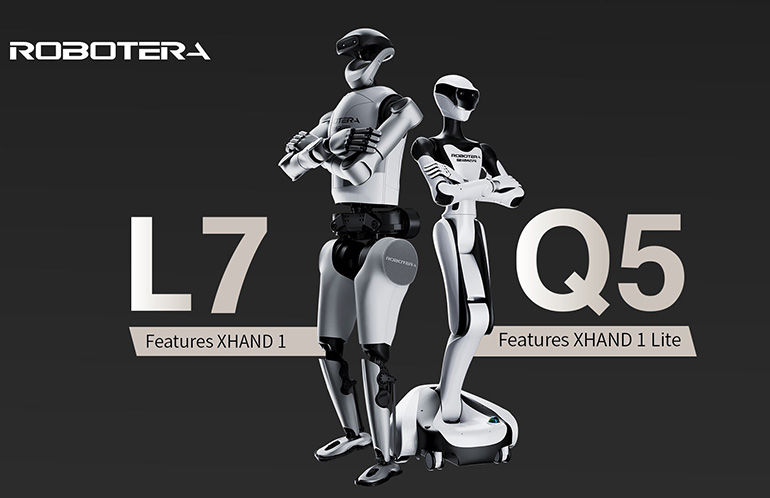
ROBOTERA is developing humanoid and service robots. Source: ROBOTERA
Embodied intelligence, or the combination of robotics and artificial intelligence, is one of the top areas of investment this year. ROBOTERA last week secured nearly RMB 1 billion, or about $140 million U.S., in Series A+ financing. The company today said it has signed a strategic cooperation agreement with the United Nations Industrial Development Organization, or UNIDO, to advance industrial development and support UN 2030 Sustainable Development Goals.
Founded in 2023, Robotera said it is building “general-purpose robots” that can learn, adapt, and act through continuous interaction with the physical world. The Beijing-based company currently operates three core product lines: bipedal humanoid robots, wheeled service robots, and dexterous hands.
Robotera claimed that it has already deployed its systems with nine of the world’s top 10 most valuable technology companies.
ROBOTERA touts humanoid, hand performance
Robotera asserted that its platforms offer high performance and real-world capabilities. Its full-size humanoid demonstrated its environmental adaptability with autonomous walking in snow in January 2024.
The robot also set records with its 1.47 m (4.8 ft.) long jump and 95.64 cm (3.1 ft.) high jump at this year’s World Humanoid Robot Games.
The company’s XHAND 1 dexterous hand features a direct-drive architecture optimized for reinforcement learning in embodied intelligence research. Capable of manipulating more than 100 distinct tools, XHAND 1 is used in laboratories worldwide, forming the basis of numerous peer-reviewed publications, it said.
Chinese company and UN to collaborate
Robotera said its agreement with UNIDO “marks a significant milestone in global industrial-intelligence collaboration and reflects a shared belief in the transformative power of embodied intelligence.” The partnership is built on three core initiatives:
- Technology deployment: ROBOTERA and UNIDO said they will focus on developing and promoting embodied intelligence systems for manufacturing, logistics, and commercial services. Their goal is to enhance operational efficiency, improve working environments, and lower the barriers for small and midsize enterprises (SMEs) to adopt these technologies.
- Global collaboration: With UNIDO’s global network, the two parties will launch cross-border project implementation. Joint initiatives are intended to promote advanced robotics applications, strengthen technical exchanges, share best practices in embodied intelligence, and support member states in large-scale adoption of next-generation robotics.
- Ecosystem building: The Beijing Digital Economy Centre of Excellence (CoE) will serve as a hub for innovation, hosting joint labs and fostering collaboration among startups, governments, and enterprises. This mirrors open innovation models seen in tech ecosystems worldwide, noted the partners.
“The partnership represents a powerful alignment between technological excellence and global responsibility,” stated Dr. Jianyu Chen, founder of ROBOTERA. “Through joint solution deployment, international collaboration, co-building of innovation ecosystems, and co-creation of technical standards, we aim to ensure robots are not only efficient tools for production—but [also] trusted ‘human partners’ in advancing sustainable development.”
ROBOTERA is planning to roll out pilot programs soon, targeting regions with urgent needs in industrial modernization. It said the combination of its research and development with UNIDO’s policy reach will position embodied intelligence as a cornerstone of equitable, sustainable industrial futures.
“This collaboration signals a new chapter where Chinese technological innovation actively contributes to global public good—proving that the future of industry must be not only intelligent but also inclusive,” said ROBOTERA.
Funding to drive mass production
Geeley Capital led Robotera’s round, with strategic participation from BAIC Capital. Robotera said it also secured backing from multiple global industrial leaders, and its investor base includes Alibaba Group and Haier Capital.
The company plans to use the new capital to iterate its robots and enable the mass production and delivery of its full portfolio. China has a stated priority of developing and producing more robots and physical AI, specifically including humanoids.
Robotera said the support of Geely Capital and BAIC Capital will provide strategic synergies, particularly in industrial deployment, supply chain integration, and real-world application scenarios.

The post ROBOTERA gets Series A funding, partners with UNIDO on embodied intelligence appeared first on The Robot Report.
View Source


