Iván Hernández Dalas: Looking back at iRobot’s diversification attempts through the years
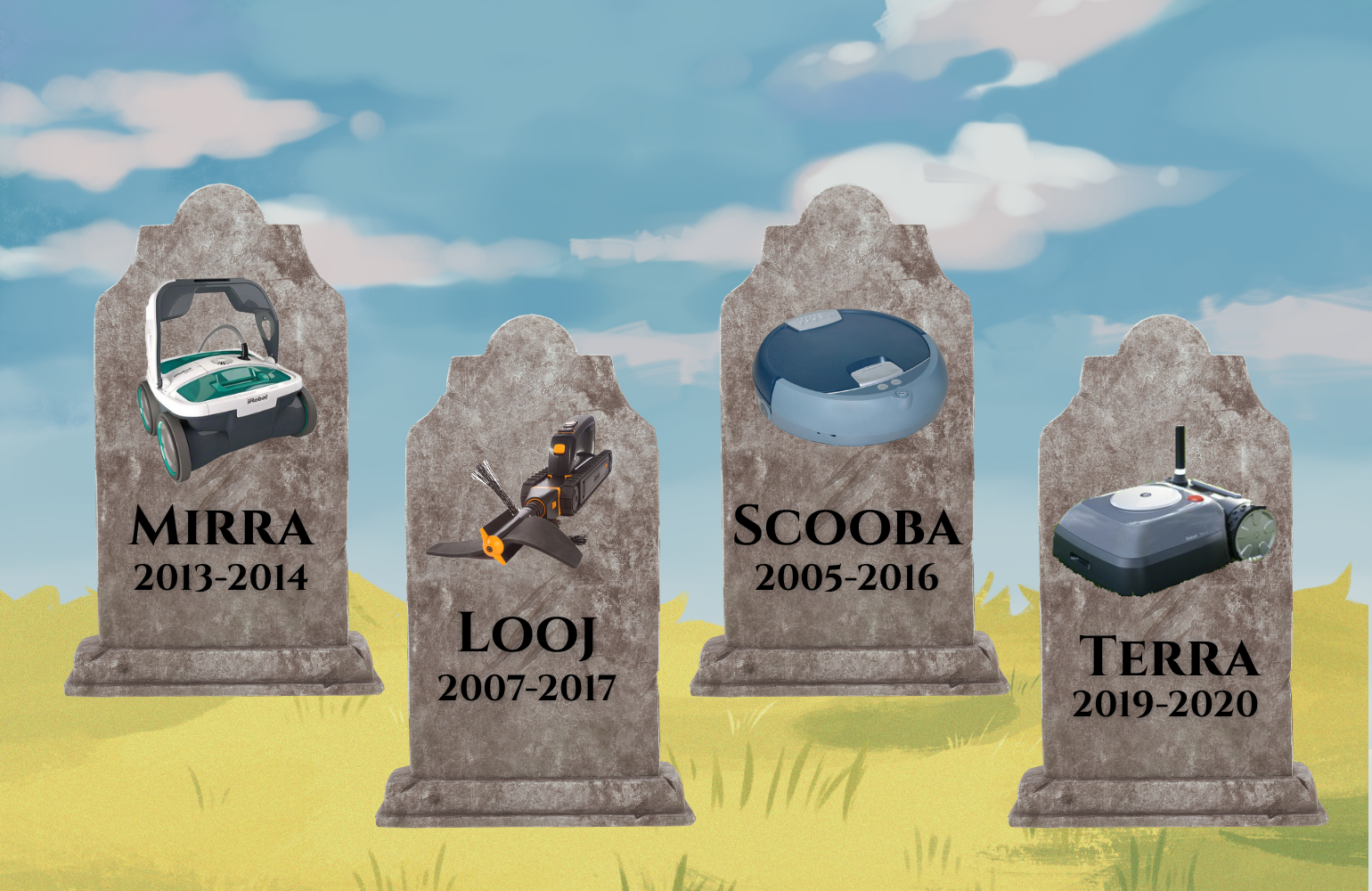
Some of iRobot’s discontinued robots, including the Mirra, Looj, Scooba, and Terra. | Source: iRobot, Wikipedia, and Adobe Stock
Right now, iRobot Corp.’s future is uncertain. The company officially started the Chapter 11 bankruptcy process earlier this month. It said it expects the proceedings to be finished by February 2026 and for Roomba robot vacuums to operate normally during the restructuring.
While iRobot is best known for the Roomba, in its over 35 years of operation so far, the Bedford, Mass.-based company has developed a range of other robots. Let’s look back at some of the many robots iRobot has developed besides the Roomba.
iRobot roots were in space exploration with Genghis
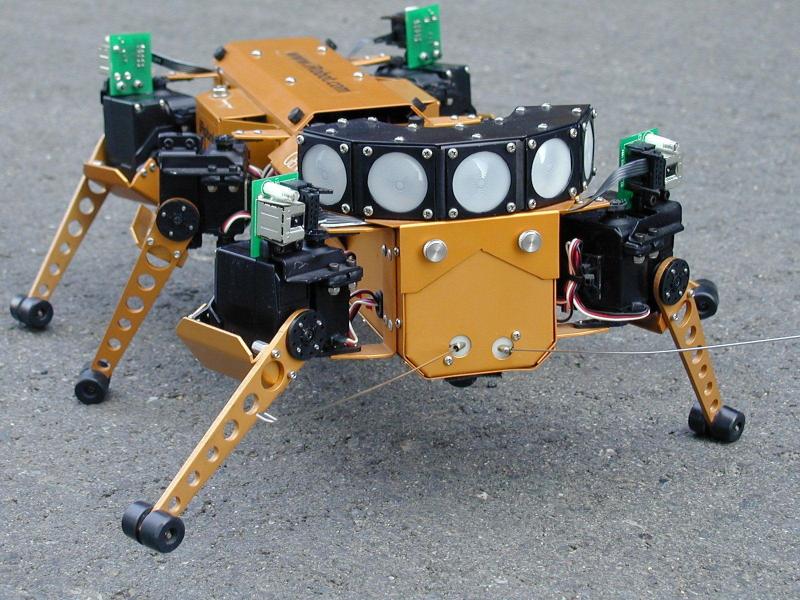
The Genghis robot used aircraft servos. | Source: Smithsonian Air and Space Museum
Genghis was originally developed at the MIT lab of Rodney Brooks, one of iRobot’s co-founders, around 1991. Brooks designed Genghis for space exploration.
The six-legged, insect-like robot used airplane servos for its leg motors. Genghis demonstrated how complex behaviors, such as crawling, could be achieved using a network of simple, decentralized controllers rather than a central control system.
Instead of having a central controller, each leg on the robot had its own built-in sensors that would sense obstacles in its path. The legs were programmed with a few basic behaviors and could individually react to different scenarios.
Genghis has been on display at the National Air and Space Museum of the Smithsonian Institution in Washington, D.C.
Ariel detected and eliminated mines in surf zones
Before selling its military robotics unit in 2016, iRobot developed many robots for military applications. Ariel was one of the earliest. Developed in 1996, this robot walked sideways, like a crab, underwater to search for mines on the ocean floor.
While iRobot took biological inspiration for Ariel’s design, the robot wasn’t prone to being stuck on its back like a crab flipped by the waves or a predator. Instead, Ariel could reorient itself and its legs to keep walking with its body upside down.
Despite these advantages, Ariel also had its drawbacks. The robot’s legs were prone to getting stuck in large rocks.
iRobot’s best-known military robot: PackBot
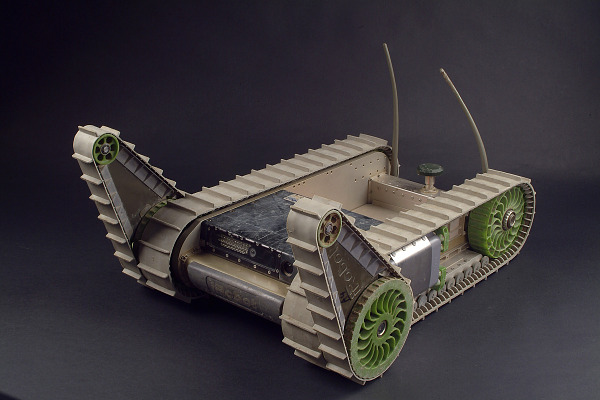
iRobot’s PackBot. | Source: iRobot
iRobot first started developing PackBot in 1998 after it won a DARPA contract to build a tactical mobile robot. The robot would eventually evolve into a whole series of military robots designed for situational awareness, reconnaissance, and explosive ordnance disposal (EOD), among other missions.
In 2001, the PackBot helped to search the World Trade Center after the September 11 terrorist attacks. A year later, the robot was deployed with U.S. troops for the first time.
In 2009, the U.S. military had more than 2,000 PackBots on station in Iraq and Afghanistan. A few years later, PackBot was used to gather data on the dangerous conditions at the Fukushima Daiichi nuclear disaster site.
iRobot released a few different PackBot variants. These included PackBot Scout, the basic PackBot configuration; PackBot Explorer, which had a payload that enables it to peek over obstacles; and PackBot EOD, which specialized in EOD.
My Real Baby was first iRobot home system
It might be surprising to learn that iRobot’s first robot for home use wasn’t the Roomba vacuum cleaner but instead was My Real Baby, a robotic toy. iRobot produced this product in partnership with Hasbro and launched it in 2000.
My Real Baby was meant to look like a real human infant. It featured animatronic facial expressions to be emotionally expressive and responsive.
Post-Roomba, iRobot explored mopping
In 2005, iRobot released the Scooba, its floor-washing robot. The company kept the Scooba line alive until 2016, when it acquired Braava from Evolution Robotics.
Early iterations of the Scooba required either a special non-bleach cleaning solution or white vinegar to wash hard floors. While later models could scrub floors with just plain water.
iRobot discontinued the Braava line in 2025 when it shifted to its Roomba-branded vacuum/mob combinations.
Dirt Dog tackled industrial floors
iRobot’s next commercial robot was the Dirt Dog, released in 2006. This variant of the Roomba was designed to sweep up in workshops. It could pick up small objects like nuts, bolts, dirt, and debris from a workshop or similar floor.
Dirt Dog worked on hard floors, shop carpets, and other industrial floor surfaces. iRobot discontinued that robot in 2010.

iRobot dabbled in hobby robots with Create
In 2007, iRobot released Create, a programmable mobile hobby robot. The robot enabled users to change or adapt the robot’s functions through experimentation with the basic elements of robotics.
Users could also add sensors, grippers, wireless connections, computers, or other hardware.
In the years following its initial release, iRobot launched Create 2 and Create 3. Later, in 2019, iRobot acquired Root, an educational coding robot.
Verro and Mirra took on pool cleaning
During its heyday, iRobot released two different lines of pool-cleaning robots. Its first was Verro, released in 2007. Verro was originally developed by companies belonging to Aqua Products Group, which had been in the pool-cleaning business for decades. At launch, iRobot said Verro could clean pools from floor to waterline in 60 to 90 minutes.
In 2013, iRobot launched Mirra 530, another pool-cleaning robot. The robot could clean a pool’s floor and walls of large and small debris. Mirra was discontinued in 2014.
Remote-controlled Looj cleaned gutters
2007 was a busy year for iRobot. Alongside hobby robots and pool-cleaning robots, it also released Looj, a gutter cleaning robot.
Unlike iRobot’s other offerings, Looj wasn’t autonomous. Instead, it could be remotely controlled to maneuver into most gutters and dislodge debris like leaves and pine needles.
The robot was modeled after a toy tank with long treads that helped it move inside the gutters. iRobot discontinued Looj in 2017.
Seaglider was used in academic and military applications
iRobot developed the Seaglider, a dual-role autonomous underwater robot, with the University of Washington. Seaglider could operate for months over thousands of kilometers on one battery charge.
That robot provided scientists and naval intelligence with oceanographic measurements and be used in military applications. In 2010, Seaglider helped to monitor the Deepwater Horizon oil spill in the Gulf of Mexico. It detected underwater pools of oil.
iRobot made foray into telepresence robots
In 2012, iRobot announced the RP-VITA Remote Presence Robot. This robot was developed with InTouch Health to allow remote doctor-to-patient consults. In 2013, it earned 510(k) clearance by the U.S. Food and Drug Administration (FDA) for use in hospitals.
iRobot said the RP-VITA could be used for active patient monitoring in pre-operative, peri-operative, and post-surgical settings. While iRobot helped develop this robot, it was sold by InTouch Health.
In 2013, iRobot worked with Cisco to bring the Ava 500 video collaboration robot to market. The telepresence robot could enable people working off-site to participate in meetings and presentations where movement and location spontaneity are important. Ava Robotics spun out of iRobot in 2016.
Terra, the mower that never left development
While Terra was never actually released to the public, it was still a notable part of iRobot’s journey. Terra was iRobot’s robotic lawn mower.
This product was officially unveiled in 2019 and then delayed in 2020 due to the COVID-19 pandemic. The company never returned to Terra after this delay.
The post Looking back at iRobot’s diversification attempts through the years appeared first on The Robot Report.
View Source


