Iván Hernández Dalas: Richtech Dex demonstrates the potential of wheeled mobile manipulators
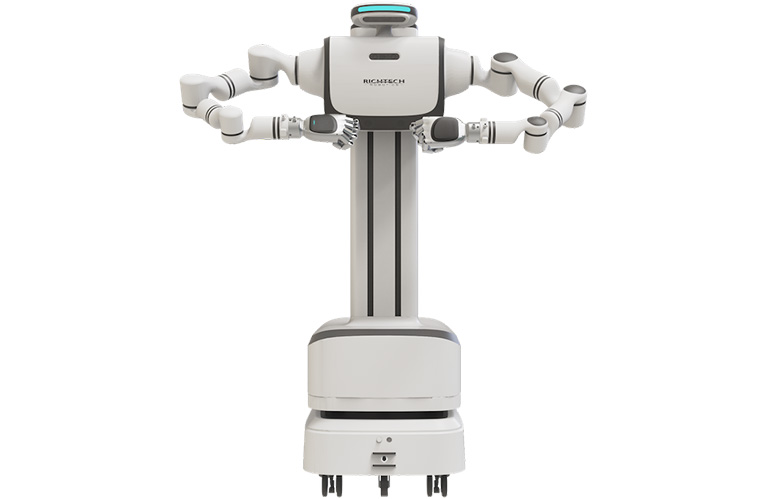
Richtech Robotics offers the Dex mobile manipulator. Source: Richtech Robotics
While legged humanoid robots are getting a lot of attention, their wheeled siblings show great promise for mobile manipulators.
Visiting Persona AI is always awe-striking. Most VC portfolios consist of companies marketing a single system, such as a B2B AI platform, a gripper, or a novel sensor, but a humanoid represents over 1,000 different systems that need to work in coordination to propel forward.
What many observers fail to appreciate is that every cable, gear, articulation has a failure point, and it takes a superhuman team of mechanical, electrical, and software engineers to collaborate and compensate for boundaries dictated by the laws of physics. Basically, building bots consumes a lot of human creativity.
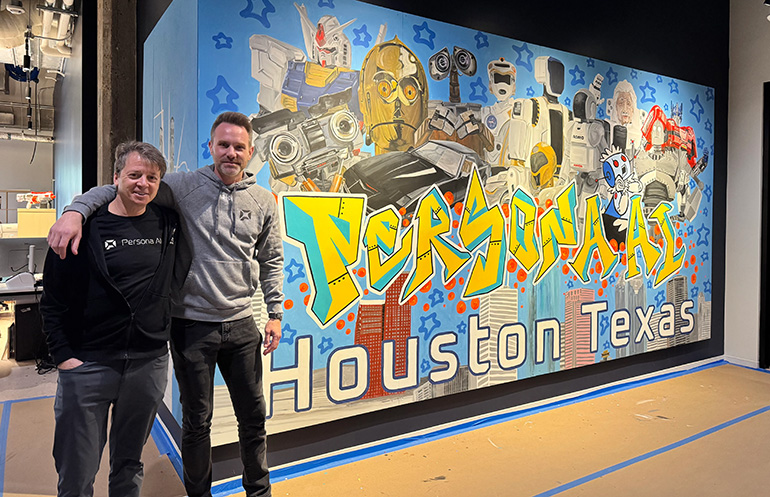
Oliver Mitchell (author) and Nic Radford, CEO of Persona AI, at the company’s Houston headquarters. Credit: Oliver Mitchell
Multiple paths to mobile manipulation
Other robot startups are pursuing alternative paths. Afterall, not every task requires bipedal legs, unless you work in very tight spaces like shipyards and my New York City apartment.
This thinking has given way to a new wave of streamlined, humanoid-like robots, or autonomous mobile robots (AMRs) with arms. There are many examples of these types of products; my favorites include Moxi from Diligent Robotics, Eve from 1X Technologies, and KR1 from Kinisi Robotics.
Grand View Research estimates that wheeled humanoid-like robots account for 65% of the current $1.6 billion market.
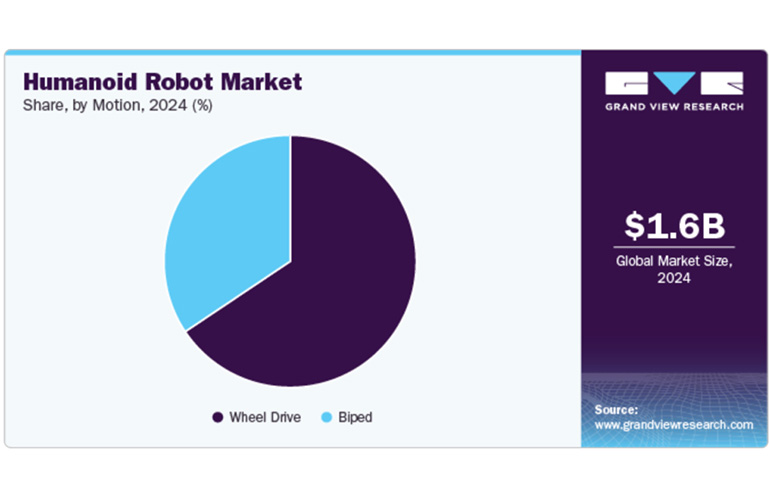
Wheeled mobile manipulators outnumbered bipedal humanoids. Source: Grand View Research
Richtech identifies where robots are needed
Last month, I had the opportunity to speak with Matt Casella, president of Richtech Robotics, the publicly traded leader in the services space. According to Casella, the company is the brainchild of Wayne Huang, who has spent decades building AI systems to control robotic arms.
Richtech has a wide product line, including autonomous industrial vacuum cleaners, logistics platforms like a waiter on wheels, and even a scorpion-inspired bartending robot.
“Early customer discovery focused on addressing the labor shortages plaguing the service industry,” recalled Casella. “The founders recognized that 38% of small businesses reported unfilled job openings, with the hospitality and leisure sectors particularly affected. Richtech validated their solution through initial deployments of food delivery robots in the catering industry around 2020-2021, achieving early success with over 80 customers.”
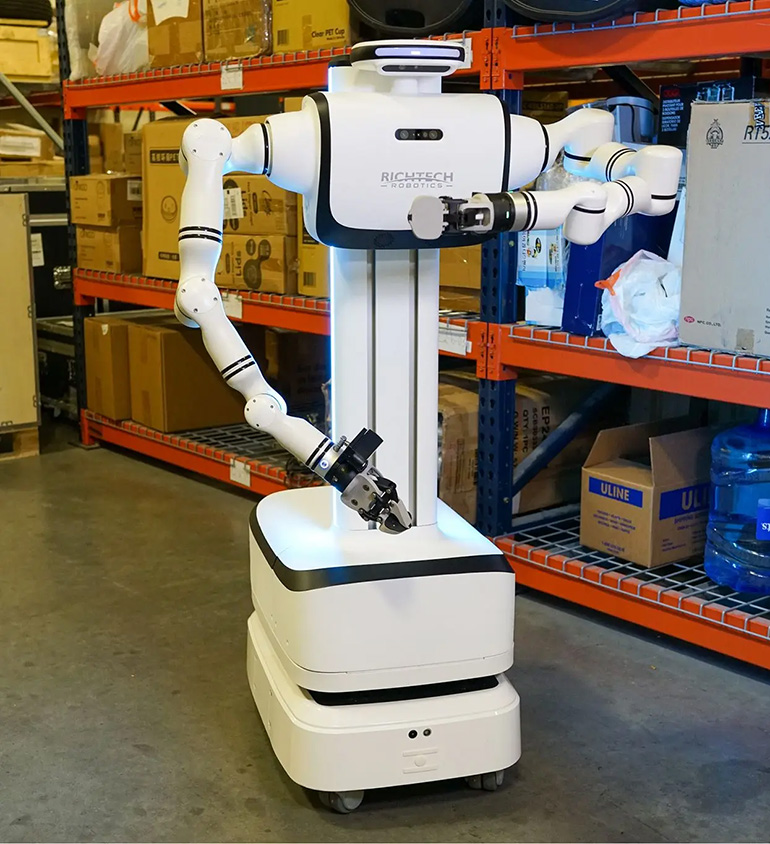
The Dex robot has a telescoping neck and wheeled AMR base. Source: Richtech Robotics
Last October, the company announced its newest system, Dex, a mobile two-armed robot on wheels. To explain the design decision of a wheeled humanoid-like robot vs. a bipedal legged solution, Richtech’s president said it all came down to battery life.
“When designing Dex, our first mobile humanoid robot, Richtech deliberately chose wheels over legs for practical industrial deployment,” said Casella.
“While bipedal robots struggle with limited battery life and constant balance requirements, Dex’s wheeled AMR platform operates continuously for 4+ hours, carries heavier payloads, safely navigates tight spaces with faster response times, maintains rock-solid stability in human environments, and consumes less energy than legged alternatives,” he said. “This engineering choice prioritizes operational reliability over novelty, essential for commercial deployment where downtime equals lost revenue.”
Richtech Robotics works with NVIDIA
To produce Dex’s AI technology, Richtech partnered with NVIDIA to enable a suite of applications.
“Richtech Robotics always puts R&D innovation first, focusing on AI algorithms and cloud management software,” Casella explained.
“Dex’s architecture integrates dual-arm manipulation with an NVIDIA Jetson Thor processor to enable real-time AI vision, decision-making, and task execution,” he added. “The system will leverage lidar-based SLAM navigation with millisecond obstacle detection, advanced natural language processing for customer interactions, and proprietary edge-computing algorithms that enable autonomous decision-making without constant cloud connectivity.”
The partnership with NVIDIA didn’t stop with Jetson Thor processors. Dex also uses NVIDIA’s Isaac Sim workflow to deliver enterprise-level training simulations, enabling robot deployments in real-world industrial settings, including manufacturing floors, warehouses, and other complex environments.
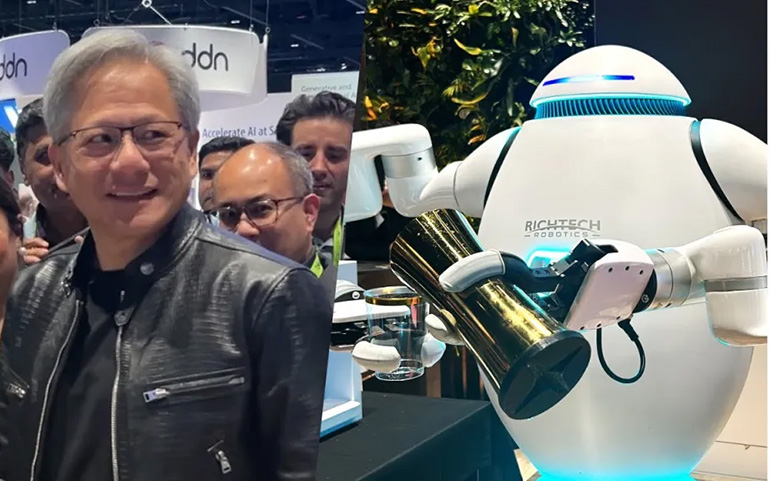
NVIDIA CEO Jensen Huang at the Richtech booth at the GTC event. Source: Richtech Robotics
Mobile manipulators, humanoids maneuver for market share
Today, Richtech Robotics competes for market share against Bear Robotics, Keenon, and Pudu (which has a humanoid product line).
Dex now opens the door to new opportunities. It is unclear how many of Richtech’s current 450 deployments will be ready for a wheeled humanoid-like robot; the industry is still waiting for the first Dex customer announcement. Casella proudly promoted the company’s flexible offerings.
“Richtech’s business model is anchored in robot-as-a-service (RaaS) deployments across commercial and industrial environments,” he said. “We also offer direct sales when that structure aligns better with customer requirements. Richtech engages in strategic partnerships with major hospitality and retail brands to scale deployment.”
Unlike most traditional companies, Richtech even has its own flagship retail presence, under the CLOUFFEE & Tea and AlphaMax brands. According to Casella, these locations “provide both revenue and real-world environments that accelerate product improvement.”
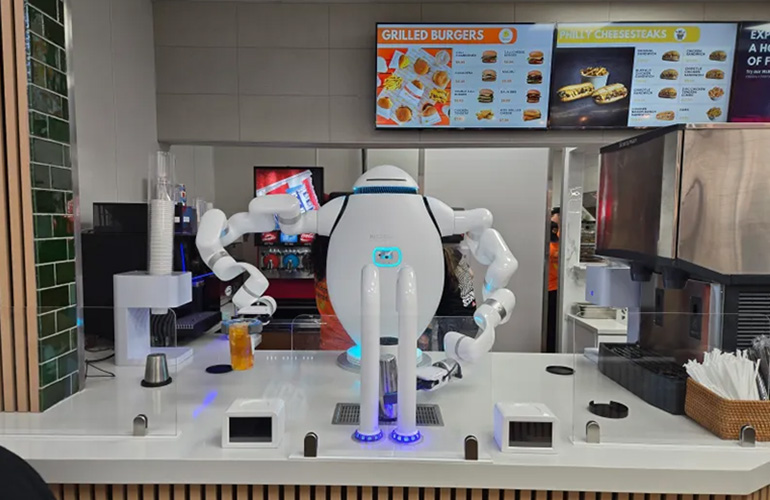
ADAM robot at work in a restaurant setting. Source: Richtech Robotics
Casella looks to DaaS
In the long term, Richtech Robotics aims to be a data-centric company.
“As our installed base grows, we are evolving our model to include data as a service [DaaS],” said Casella. “The U.S. robotics market faces a shortage of high-quality, real-world operational data that is needed to train and scale physical AI systems.”
“Because our robots work continuously in dynamic environments, they generate valuable data that strengthens our own training pipelines,” he noted. “Over time, we plan to make portions of these datasets and related services available to partners who are developing or deploying physical AI systems in the U.S.”
Today, Richtech is focused on scaling its fleet of robots to over 1,000 active deployments, including transitioning from hospitality service to industrial settings with Dex.
“The reality is that service industries face chronic labor shortages that robots help address. Rather than displacing workers, we’re filling positions that remain persistently vacant,” said Casella of his company’s mission. “Robots fill in staffing gaps, preventing people from being overburdened with necessary but menial and time-consuming tasks.”
“Our robots enable existing staff to engage in higher-value activities that require human judgment and empathy,” he added. “We’re committed to being part of a future where humans and robots collaborate to deliver better outcomes for businesses and customers alike.”
The design of Dex and the broader wheeled humanoid-like market reminds me of Hamlet. To leg or not to leg, that is the question. Unlike the Danish prince’s dilemma, robotics cannot afford indecision; form must follow function.

The post Richtech Dex demonstrates the potential of wheeled mobile manipulators appeared first on The Robot Report.
View Source


