Iván Hernández Dalas: Lyte brings in $107M to build perception systems for AI-enabled robots
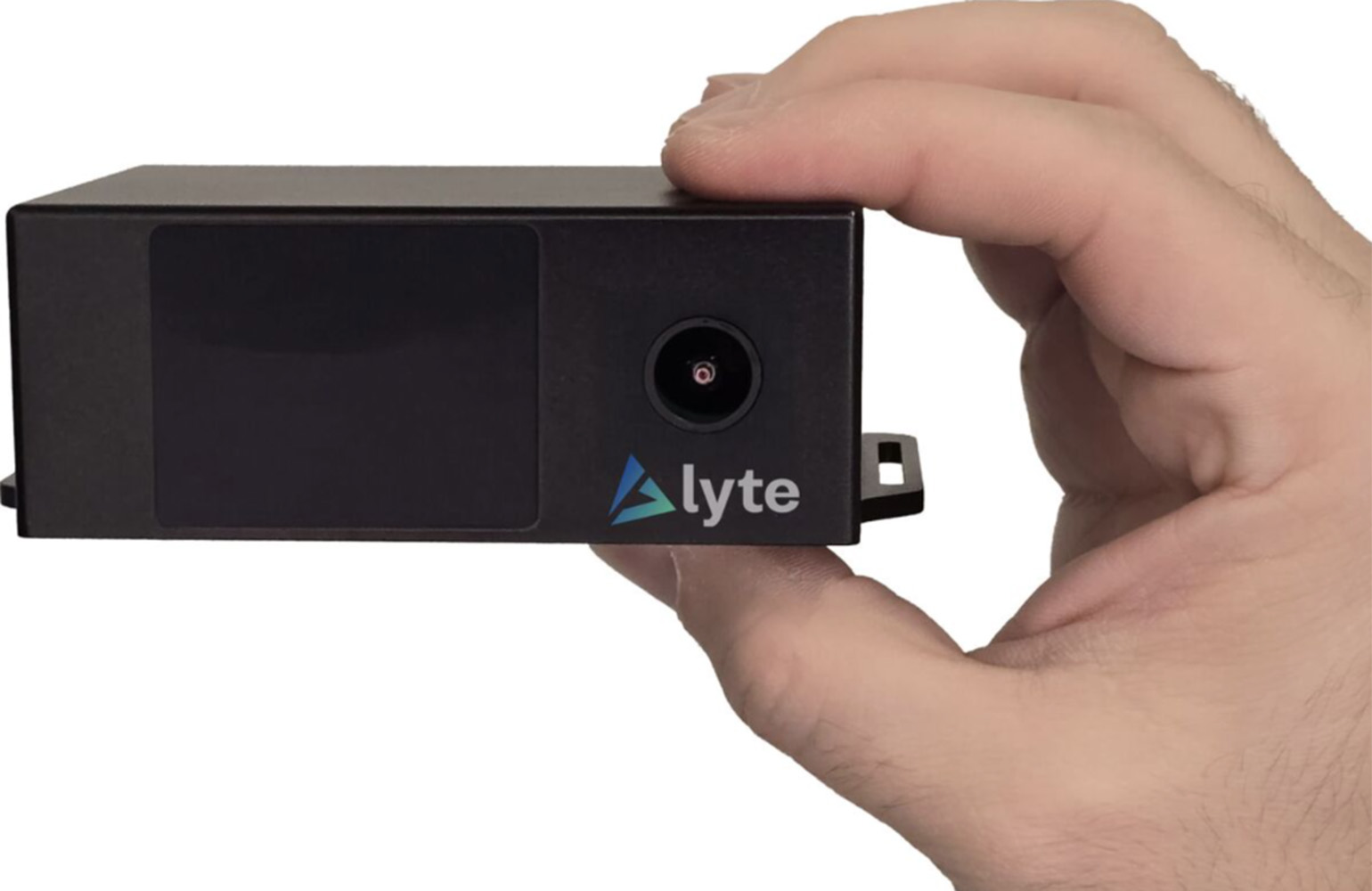
LyteVision fuses 4D vision, RGB, and IMU sensing at the edge. | Source: Lyte AI
Lyte AI this week emerged from stealth with $107 million in aggregate funding. The startup plans to use the investment to build a perception foundation for autonomous machines.
The Mountain View, Calif.-based company said its core product, LyteVision, vertically integrates advanced 4D vision, RGB imaging, and motion sensing into a single platform to deliver unified spatial and visual data through one connection. LyteVision enables a wide range of physical AI platforms, including autonomous mobile robots, robotic arms, quadrupeds, robotaxis, and humanoids, it claimed.
“Physical AI will change how the world works, but only if robots can see it clearly,” stated Alexander Shpunt, co-founder and CEO of Lyte AI. “After helping shape how billions of people interact with technology, we’ve assembled an extraordinary team to build the perception layer that enables robots to operate safely and reliably at scale.”
Shpunt, Arman Hajati, and Yuval Gerson, who previously worked on Apple’s depth-sensing and perception technologies, founded Lyte in 2021. Shpunt previously co-founded and served as chief technology officer of PrimeSense, the 3D sensing company that powered Microsoft Kinect. That company later became the foundation of Apple’s depth platform after its 2013 acquisition.
Lyte AI address a ‘structural problem’ in robotics
The AI robotics market will reach $125 billion by 2030, projected Grand View Research. However, more than 60% of industrial companies lack the internal capability to implement robotic automation, including sensor integration, according to McKinsey & Co.
Lyte AI asserted that its approach addresses a “structural problem” in robotics. “Teams today assemble perception from multiple vendors, then spend months calibrating sensors, writing fusion software, and debugging integration failures,” it said. “Lyte’s vertically integrated stack eliminates that cycle.”
The company said it has engineered its platform for safety, reliability, and performance from the hardware up. Lyte AI has paired that with an AI-driven operating layer that continuously advances alongside breakthroughs in vision, language, and action models. This enables physical AI systems to perceive, reason, and act with increasing intelligence over time, it said.

Chairman is a semiconductor entrepreneur
Avigdor Willenz, a semiconductor entrepreneur, is Lyte’s founding investor and chairman of the board. The funding included participation from his group, Fidelity Management & Research Co., Atreides Management, Exor Ventures, Key1 Capital, and Venture Tech Alliance.
“Lyte is building at the right layer, at the right moment,” said Willenz. “I’ve seen how foundational technologies unlock entire industries. What stands out here is the depth of the team and the discipline to solve perception as a system — where lasting value is created.”
Lyte’s perception platform was recognized at CES 2026 with a Best of Innovation Award in Robotics and as an Honoree in Vehicle Tech and Advanced Mobility, selected from a record 3,600 submissions.
“Lyte is building core infrastructure for physical AI: a perception platform that helps robots safely understand and interact with the real world,” said Gavin Baker, managing partner at Atreides Management. “The founders already pioneered one era of 3D sensing and are among the select few with the credibility and technical depth to usher in a new frontier defined by coherent 4D vision and full-stack perception.”
The post Lyte brings in $107M to build perception systems for AI-enabled robots appeared first on The Robot Report.
View Source


