Iván Hernández Dalas: Destro AI launches Agentic AI Brain for human-robot collaboration
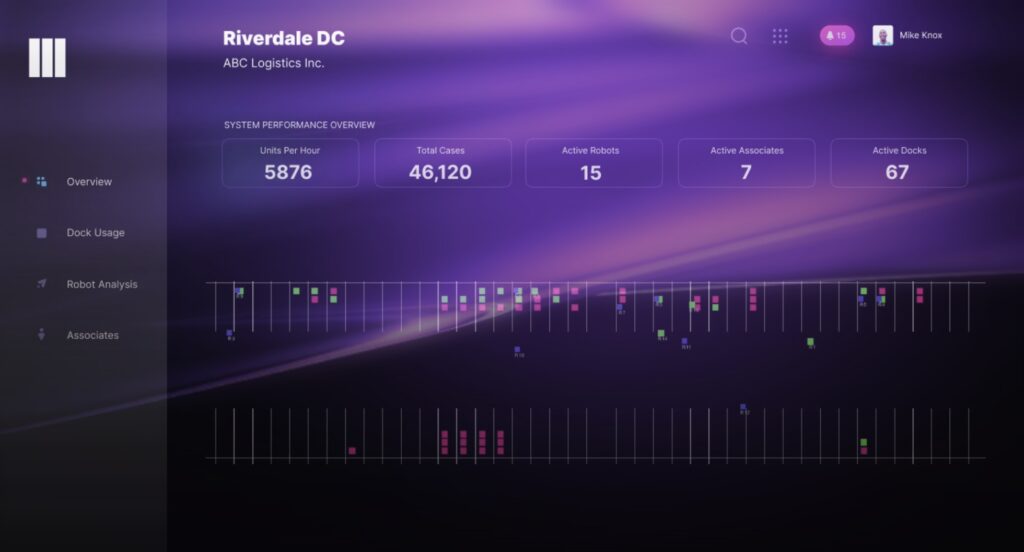
Screenshot of Destro AI’s MothershipOS cloud-based orchestration engine. | Credit: Destro AI
LAS VEGAS — Destro AI today emerged from stealth and launched its Agentic AI Brain, a centralized intelligence layer designed to coordinate robots and humans as a single adaptive system. The announcement coincided with the company’s public debut at Manifest, where it is showing live deployments of its technology in production environments.
As robots become more capable, most deployments still rely on siloed intelligence — robots make local decisions, while humans and legacy systems handle planning, prioritization, and exception management, said Destro. This split limits scalability and forces operations teams to manually coordinate what should be autonomous behavior.
“Robots today are smart locally, but dumb collectively,” said Manthan Pawar, founder and CEO of Destro AI. “We’re building the brain that lets robot agents and humans operate as one system — deciding, adapting, and executing together instead of relying on static workflows or manual coordination.
“Many robots today are point solutions,” he told The Robot Report. “That’s the real reason why so many warehouses don’t have robots. Robots alone won’t solve complex problems.”
Pawar noted there are more than 1,000 autonomous mobile robot (AMR) providers, over 600 suppliers of automated forklifts, and 200+ humanoid robot developers.
Agentic AI Brain bridges gap between humans and robots
Destro AI said it is building agentic intelligence for physical operations. The Brooklyn, N.Y.-based company added that it focuses on complex, real-world environments where static automation and siloed robotics fall short.
The Agentic AI Brain functions as a shared brain for robot agents and human collaborators, combining off-robot reasoning with on-robot execution. The system continuously assesses the state of the physical environment, decides what actions should happen next, and dynamically directs robots and people to execute work together.
MothershipOS is a cloud-based orchestration engine that is agnostic to workflows and hardware, explained Pawar. VisionOS collects data for training embodied AI using smart glasses.
VisionOS can autonomously count boxes and SKUs, building a robot model at the same time. Associates do not need handheld scanners, but the software can track barcodes, calculate angles and pressure for grasping, and conduct multiple levels of analysis from vision data.
Rather than treating robots as isolated machines performing predefined tasks, Destro treats them as agents—capable of receiving goals, adapting to changing conditions, and coordinating with other agents and humans in real time. Intelligence lives both off the robot, where higher-level reasoning and orchestration occurs, and on the robot, where execution and local autonomy take place.

Destro AI begins with retail, logistics deployments
Destro said it designed its platform to operate above individual robot hardware, enabling the same intelligence layer to guide different robot types, tools, and human roles without forcing rigid process definitions. This approach allows systems to adapt to real-world variability — missed handoffs, congestion, shifting priorities, and exceptions — without stopping operations or requiring human micromanagement.
The company is currently deploying its Agentic AI Brain with large logistics and retail operators, focusing on high-variability physical workflows where traditional automation breaks down.
Destro said early deployments have proven improvements in system-level throughput, resilience, and human-robot collaboration by reducing idle time, unnecessary handoffs, and reactive decision-making.
Pawar cited the example of a cross-docking workflow. Containers go in and out, and there is complex sortation. Even without automated storage, agentic AI can help make millions of decisions at any given time for determining destinations for robots and carts.
At Manifest 2026, Destro is demonstrating how its agentic system reasons across the physical environment—assigning goals, coordinating robot agents, and guiding human collaboration as conditions change in real time.
“The future of automation isn’t more scripts or dashboards. It’s shared intelligence across humans and robots,” Pawar added. “That’s the category we’re building.”
The post Destro AI launches Agentic AI Brain for human-robot collaboration appeared first on The Robot Report.
View Source


