Iván Hernández Dalas: The hidden infrastructure challenge facing outdoor robotics OEMs
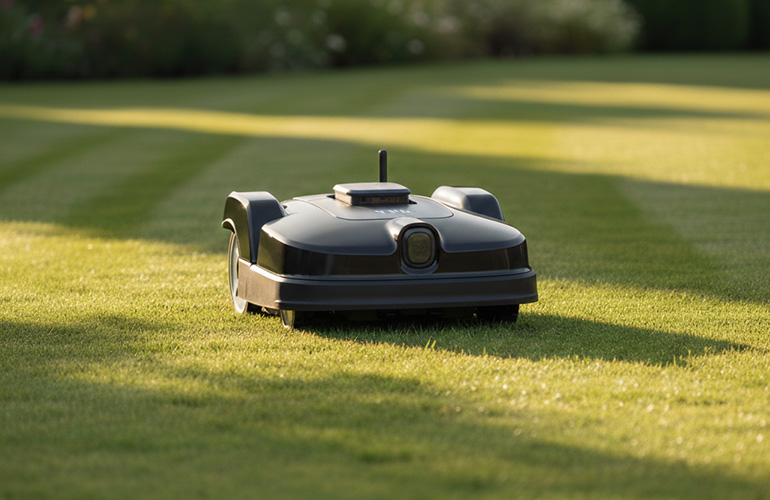
The era of burying perimeter wires is over. As the industry shifts to RTK GPS, virtual boundaries are replacing physical ones. | Credit: RTKData
The robotic lawn mower market is undergoing a fundamental transition. For years, perimeter wires defined the operating boundaries for autonomous mowers, requiring homeowners to bury low-voltage cables around their property. These wires break. They complicate landscaping changes. Installation takes hours.
The industry response has been a shift toward real-time kinematic Global Positioning System (RTK GPS) navigation, where virtual boundaries replace physical infrastructure, and centimeter-level accuracy enables precise mowing patterns.
This transition solves the customer experience problem. But it creates a new challenge for OEMs: the robots now depend on continuous, reliable GNSS correction data. Hardware alone is only half the equation.
The NTRIP infrastructure dilemma
RTK achieves centimeter-level precision by streaming correction data from reference stations to the rover via NTRIP, the standard protocol for transmitting RTCM corrections over the internet. For a single robot, the connection is straightforward. For a fleet of 10,000 robots distributed across multiple countries, the infrastructure requirements multiply.
An NTRIP caster must handle thousands of concurrent connections with sub-second latency. It must route each robot to the nearest base station and maintain uptime through server failures and traffic spikes during peak mowing hours. Building this in-house means dedicating engineering resources to distributed systems and geographic load balancing rather than robotics.
This creates a classic build-versus-buy decision. Why spend months developing back-end infrastructure when your core competency is building robots?

Infrastructure as a service layer
Services like RTKdata.com address this gap by providing the infrastructure layer between reference station networks and robot fleets. The service acts as a managed NTRIP caster, handling the complexity of routing correction streams to rovers regardless of geographic location.
The integration is straightforward. OEMs configure their robots with NTRIP credentials. The robot connects, sends its approximate position, and receives the appropriate correction stream.
Whether the fleet consists of 10 units in a pilot program or 10,000 units across multiple markets, the integration remains identical. Latency stays low through geographically distributed endpoints. Scalability comes from infrastructure designed for high-concurrency NTRIP workloads.
Focusing engineering where it matters
Mass adoption of autonomous outdoor robots depends on reliability. Customers expect their robotic mower to work every time, season after season. By outsourcing the RTK data layer to purpose-built services, OEMs can accelerate their path to market while concentrating engineering resources on what differentiates their product: the robot itself.
The perimeter wire is disappearing. The robots are getting smarter. The question for OEMs is whether to build the invisible infrastructure that keeps them accurate, or partner with specialists who already have.

Jonas Becker, co-founder of RTKdata
About the author
Jonas Becker is the do-founder of RTKdata.com, a global provider of GNSS correction services. With experience in satellite positioning and autonomous systems, Jonas focuses on making centimeter-level accuracy accessible and scalable for the robotics and construction industries.
For technical documentation or to evaluate network performance, professional users can access a 30-day trial.
The post The hidden infrastructure challenge facing outdoor robotics OEMs appeared first on The Robot Report.
View Source


