Iván Hernández Dalas: RoboForce raises $52M to commercialize its Titan robot
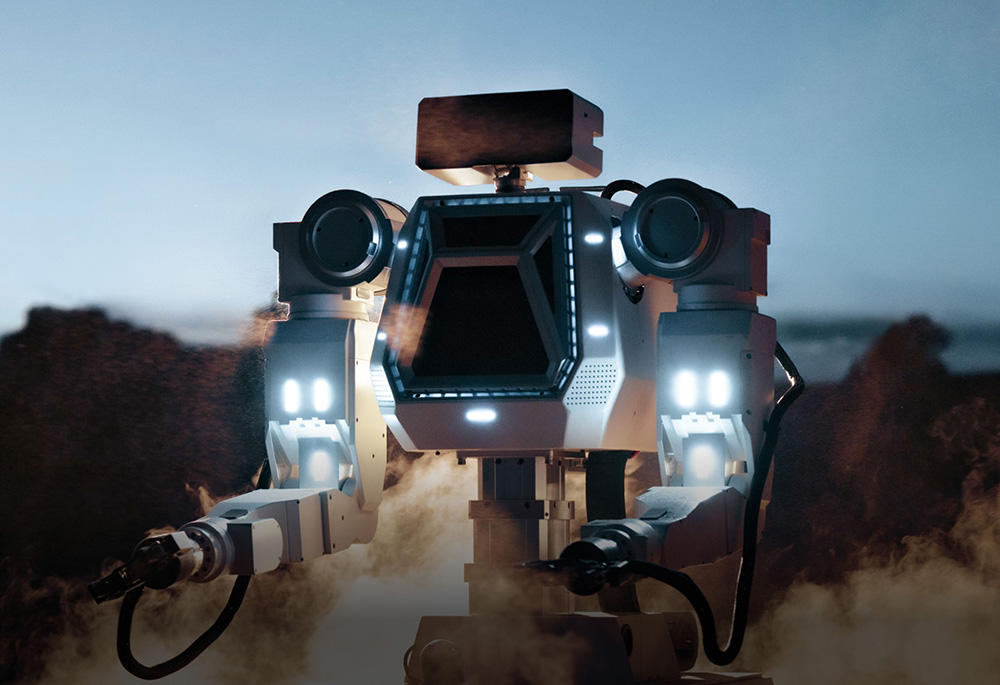
Titan is a general-purpose robot with modular hardware, high reach and payload capacity, and all-terrain mobility. | Source: RoboForce
RoboForce this week announced it has raised $52 million, bringing its total funding raised to date to $67 million. The company said it plans to use the latest round to strengthen its robot foundation model and AI data flywheel, scale manufacturing of its system, and drive commercialization.
“We started with a very well thought-through, very clear direction,” Leo Ma, the founder and CEO of RoboForce. “RoboForce started in 2023, so we’re three years into that mission. That vision gives us a clear direction, motivation, and conviction. We are building a leading global labor system to do the things that humans shouldn’t have to do.”
Last year, the Milpitas, Calif.-based company debuted Titan, its dual-armed mobile manipulator robot designed to work in demanding outdoor environments. The mobile manipulator comes in wheeled and tracked base variations, with more on the way.
YZi Labs led the round. It also included participation from Jerry Yang, the co-founder and former CEO of Yahoo Inc., who joined existing investors Myron Scholes, a Nobel Laureate economist, and Gary Rieschel, a founding partner of Qiming Ventures, Carnegie Mellon University, and more.
RoboForce targets many applications with one technical core
With Titan, RoboForce is targeting a wide range of outdoor applications, including solar, shipping, mining, manufacturing, and even work in space.
“We are combining the things that humans shouldn’t have to do, far away from our daily life, with a focus on those things that are of essential value for our society. That’s why we focus on solar energy as a clean energy source,” Ma said. “No matter what, we need energy. We need shipping, logistics, and manufacturing.”
“On the surface, it may look like multiple [applications], but if you look into the technical core, under the hood, it really is one system,” he told The Robot Report.
Titan delivers five key primitive capabilities: pick, place, press, twist, and connect. With these base capabilities, RoboForce asserted that its robot can handle almost any task.
“[Titan] is both strong and precise. It can handle a heavy payload up to 40 kg [88.1 lb.] and is quite a capable robot,” Ma said. “If you think technically, if something is much lighter, it’s easier to do precision work. But if it’s very heavy, it’s naturally very challenging to achieve [precision].”
Having a combination of both, Ma said, is what gives Titan an edge.
Software and hardware considerations for outdoor robots
Typically, it’s much easier to deploy a robot in an indoor environment when you can consistently control the temperature and lighting. It also keeps the system away from rain, snow, and dirt. However, many of the most difficult and dangerous jobs take place outside.
Creating an outdoor robot includes both hardware and software requirements. First, the robot has to be robust enough to stand up to a range of temperatures and conditions. Ma said RoboForce designs its hardware in-house because it couldn’t find off-the-shelf components, like sensors, that could work reliably in the conditions it wants to operate in.
Similarly, RoboForce created its AI pipeline from data it has collected itself. “Outdoor data is potentially the most challenging and most valuable data once you have it,” Ma said. “How do you, A. collect the data to the level of quality that you need and, B. improve the model trained by this data to survive in this environment? Not every day is a heavy sunshine day.”
Real-world data provides RoboForce with a lot of valuable information, but the company is also using simulated data to augment it.
“At the end of the day, it’s about the data efficiency,” Ma said. “We have significantly improved the time, effort, and cost to collect data, both in real and in simulation. We see there’s no reason not to use both.”
What comes next for RoboForce?
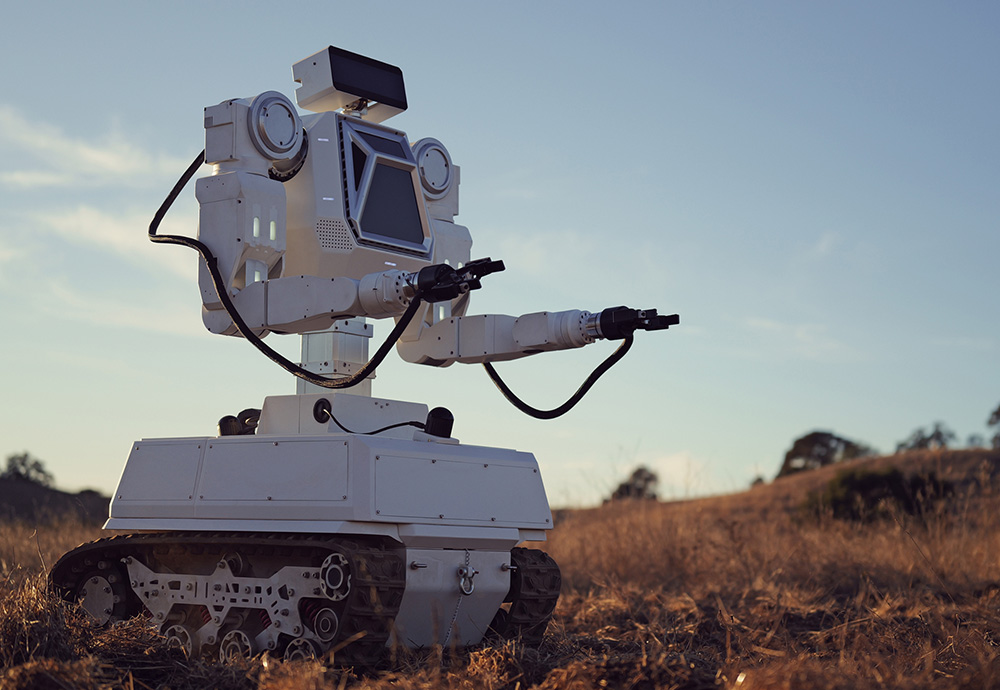
Titan can perform precision fastening, assembly, maintenance, inspection, material handling, and more. | Source: RoboForce
Right now, RoboForce is working with early partners to get Titan deployed and doing real work. Ma said the company has certified early partners in more than 12 countries. The company is working to deepen those collaborations. “We’re testing in our own field. We’re testing at a customer field,” Ma said.
The company also plans to strengthen its global supply chain operations to start ramping up production of Titan.
RoboForce’s team is made up of experts from Carnegie Mellon Robotics, Michigan Robotics, Tsinghua University, ABB Robotics, Amazon Robotics, Ubtech, Tesla Robotics, Google, Apple, and Waymo, among others, observed Ma.
“It’s not rare to have two experts start a company. But the team at RoboForce is really outstanding, and it’s rare to see,” he said.

The post RoboForce raises $52M to commercialize its Titan robot appeared first on The Robot Report.
View Source


