Iván Hernández Dalas: SDI offers ASUT drone operations certificate program
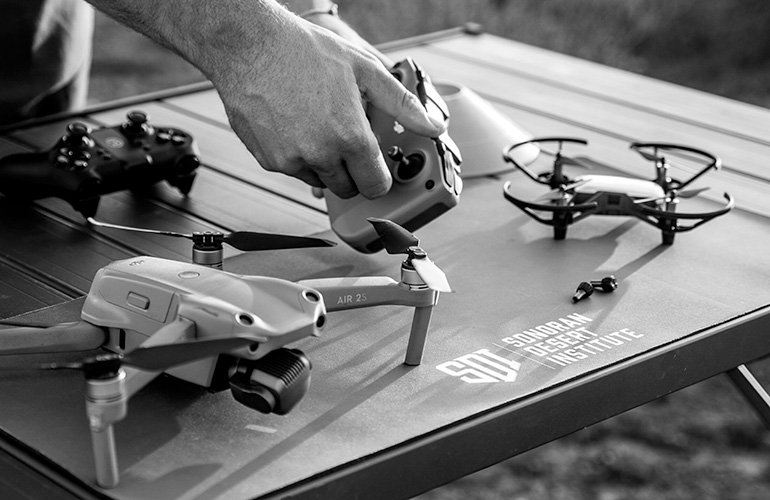
The ASUT program at Sonoran Desert Institute offers education for those passionate about the rapidly growing UAS field. | Credit: SDI
As part of an ongoing STEM education series, this week we look at opportunities in the drone space. The Sonoran Desert Institute’s Associate of Science in Uncrewed Technology, or ASUT, program offers a 100% distance-learning curriculum where students build their own drones and master technical flight skills to prepare for immediate hire in the expanding uncrewed aircraft systems industry.
From soldering components to preparing for FAA Part 107 certification, the program provides a comprehensive path for students to enter high-demand roles in drone maintenance, infrastructure inspection, and public safety.
By blending 100% distance learning with a hands-on “build and fly” curriculum, SDI’s ASUT program addresses a surging demand for skilled technicians in fields ranging from precision agriculture to public safety.
For $24,400, the 60-credit degree bridges the gap between basic drone operation and advanced flight testing, equipping students with the technical proficiency and Part 107 certification required to navigate the evolving legal and operational landscape of the uncrewed aerial systems (UAS) industry.
What skills is the ASUT program teaching?
The ASUT program is a novel certification course that enables distance learning through hands-on experience with real drones. Students progress by learning the UAS operations workflow and demonstrating proficiency both in the simulator and in real life.
Most importantly, the students gain stick time and learn how to plan and operate real missions, while understanding the legal requirements to assess the risks and fly compliant missions for legal operations throughout the U.S.
Students can prepare for and pass their Part 107 certification, preparing them for immediate hire into UAS operational jobs.
Students also learn about the proposed 14 CFR Part 108 requirements, which are preparing the way for beyond visual line-of-sight (BVLOS) operations in the near future.
The SDI ASUT program structure includes a certificate program and an associate degree in UAS technology, with the certificate serving as an introductory course for drone operation basics. The associate degree program builds upon the certificate by covering more advanced topics like remote sensing and flight operations management.
The curriculum for SDI’s UAS-213 and UAS-231 courses focuses on drone design validation and flight testing, respectively. In UAS-213, students learn to validate their drones through manual and autonomous flight testing.
UAS-231 builds on these skills by teaching them how to work with test conductors, create test cards, and conduct comprehensive flight testing campaigns covering various aspects like aerodynamics, sensors, and human factors.
The program also covers both technical skills and professional development, with students creating video content for their portfolio and learning specific industry applications like thermography and GIS data collection. The GIS course includes practical training on client interactions, flight planning, and data analysis using tools like DroneDeploy, culminating in the creation of professional reports.
The current cost of the program is $24,400, with financial assistance available. SDI offers different scholarships that help military-connected and first-responder students pay for their education.
Schools like Embry-Riddle Aeronautical University in Florida and Arizona offer a Bachelor of Science in Uncrewed Aircraft Systems with a “Design and Build” track. This is more engineering-heavy but excellent for technicians aiming for manufacturer-level roles.

What job opportunities are available?
There are a number of emerging employment opportunities in the field of UAS operations.
Maintenance and engineering roles
These roles focus on the “hardware” side—keeping the fleet airworthy and integrating new sensors.
- UAS maintenance technician: Primarily a mechanic for a drone fleet. This involves troubleshooting flight controllers, repairing carbon fiber frames, and replacing motors/ESC units.
- Key employers: Defense contractors such as AeroVironment and General Atomics, as well as commercial fleet operators.
- Avionics technician: Specialized in the electronic “brain” of the drone, including GPS modules, data links, and SATCOM systems.
- Production/assembly technician: Working in manufacturing facilities to build and test new drone models before they are shipped to customers.
Specialized flight operations
These jobs require a mix of Part 107 piloting skills and technical knowledge to operate complex payloads.
- Agricultural spray pilot: Operating large-scale heavy-lift drones to apply fertilizers or pesticides. This is a booming field due to its precision compared to traditional tractors.
- Infrastructure inspector: Using thermal and lidar sensors to inspect power lines, cell towers, or bridges. Technicians are preferred here because they can perform minor “field repairs” if a drone malfunctions in a remote area.
- Flight test operator: Working for drone manufacturers to put prototype aircraft through “torture tests” to find failure points and validate software updates.
Data and systems integration
For graduates who focused on the software and sensor side of their training.
- GIS/lidar technician: Collecting and processing 3D maps and topographical data. These technicians aren’t just flying; they are ensuring the high-end sensors (costing $20k+) are calibrated and that the data is accurate.
- UAS solutions engineer: Helping companies such as construction or mining firms figure out which drone systems they need to buy and training their internal staff on how to use them.
Public safety and defense
The public sector is growing as UAS technology evolves, becomes more resilient, and is useful for emerging sectors.
- Public safety UAS coordinator: Working for police or fire departments to manage their drone programs, maintain equipment, and ensure FAA compliance.
- Field service representative (FSR): Often involves travel (sometimes overseas) to support military UAS operations. These roles frequently require a security clearance, but they can offer the highest pay in the industry.
This article is a part of our ongoing STEM education series, looking at education and training programs for robotics and STEM-related careers.
The post SDI offers ASUT drone operations certificate program appeared first on The Robot Report.
View Source


