Iván Hernández Dalas: VDMA says Version 3.0 of VDA 5050 will help mobile robot fleets scale
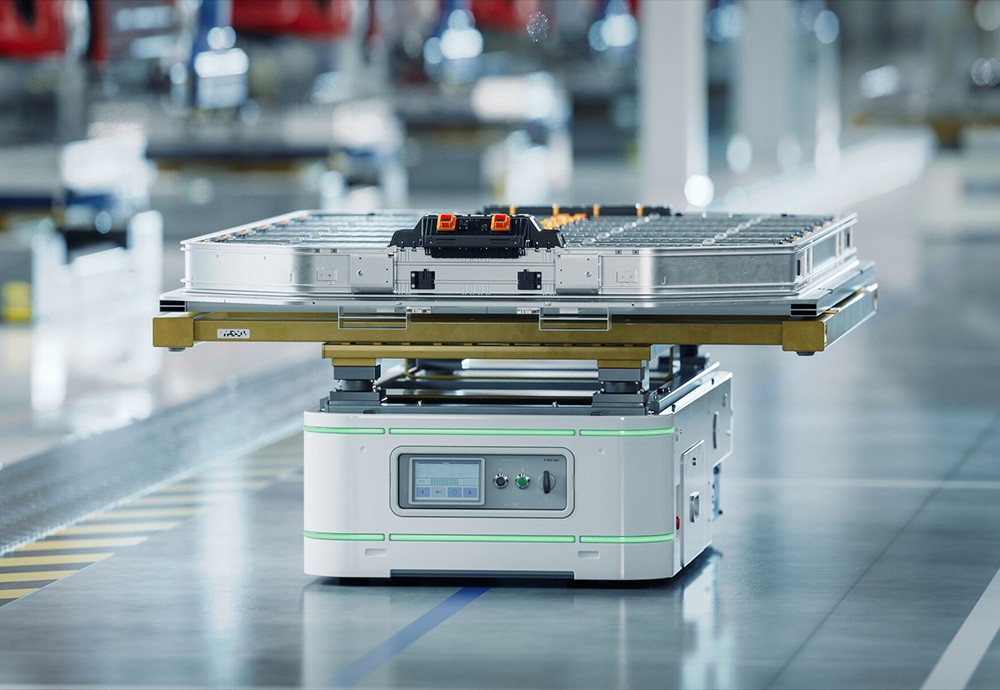
VDA 5050 is intended to enable communications among mobile robots from different vendors. Source: Shutterstock
VDMA Materials Handling, one of the largest industry associations in Europe, recently released Version 3.0 of its VDA 5050 communication interface. The interface makes it possible to operate different mobile robots with a single control system in a mixed fleet.
“Version 3.0 of VDA 5050 creates the conditions necessary to meet the growing demands for efficiency and flexibility in intralogistics material flow,” said Dr. Marcus Bollig, managing director of VDA. “The update provides exactly the tools we need for the next stage of automation in mobile robots – and thus becomes a strategic building block for the future viability of global production and logistics environments.”
VDA 5050 is an open interface that structures communication between a master controller and various mobile robots according to standardized parameters. It therefore enables heterogeneous fleets to be interoperable with a single controller.
“VDA 5050 creates an open foundation for cross-manufacturer data exchange and thus supports scalable automation concepts required by both system providers and operators of logistics environments,” said VDA.
VDA 5050 v3 supports integration of more mobile robots
With Version 3.0, the VDMA Materials Handling and Intralogistics Association and the German Association of the Automotive Industry (VDA e.V.) are now expanding the interface so that mobile robots with higher levels of autonomy can also be better integrated.
For mobile robots with a high degree of autonomy, VDMA has introduced a zone concept for free navigation. The zones define areas with specific rules governing the robots’ movement, such as restricted areas, one-way routes, or areas where the control system must grant explicit authorization.
Using this information, the robots can independently plan their own routes between the specified waypoints. This allows the central control system to continue influencing where and how robots move, while the detailed route planning takes place on the vehicle itself.
The mobile robots can then share these paths with the central control system via “path sharing,” enabling the latter to continue influencing traffic management.
Version 3.0 of VDA 5050 serves as a toolkit for automation projects, noted VDMA. It said the appropriate structure can be selected depending on the robots’ level of autonomy and the specific project requirements.

VDMA adds more features
Further innovations aim to simplify the use of the robots. For instance, error messages from the robots can be displayed in the local languages stored on the vehicle.
With the addition of a power-saving mode, mobile robots can be put into or reactivated from an energy-saving mode with a standardized action.
The existing concepts with predefined trajectories and corridors for obstacle avoidance remain an integral part of the interface in Version 3.0 in order to cover all types of mobile robots, VDMA said.
The post VDMA says Version 3.0 of VDA 5050 will help mobile robot fleets scale appeared first on The Robot Report.
View Source


