Iván Hernández Dalas: Brain Corp unveils BrainOS Clean 2.0 in partnership with Tennant
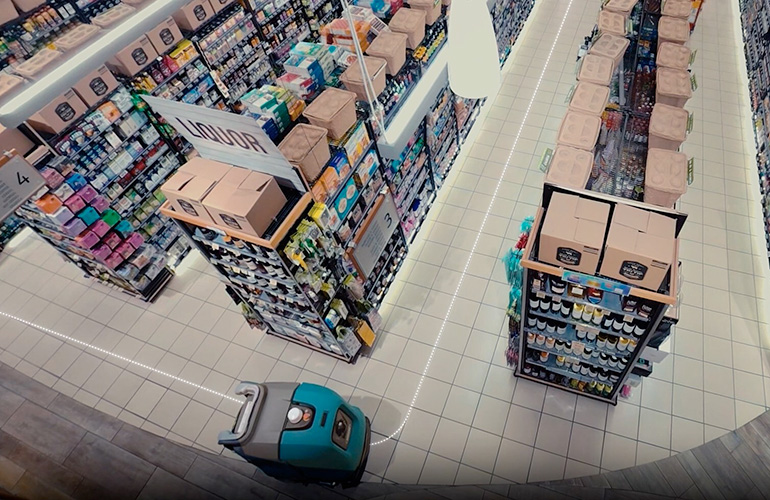
BrainOS Clean 2.0 includes SelfPath AI for adaptive autonomy for Tennant floor-cleaning robots. Credit | CNW Group/Brain Corp.
Seeking to eliminate the manual bottlenecks of industrial automation, Brain Corp. yesterday unveiled BrainOS Clean 2.0, a software update that introduced autonomous route generation to Tennant Co.’s robotic floor cleaners.
Powered by the new SelfPath AI, the update allows autonomous mobile robots (AMRs) to independently navigate and adapt to shifting commercial environments without human-led route training. The company claimed that this can accelerate fleet deployment speeds by more than 300% while significantly increasing cleaning coverage.
“BrainOS Clean 2.0 and the introduction of SelfPath AI deliver immediate commercial value: Deployments happen faster, route retraining is eliminated, and cleaning performance is improved in dynamic environments,” said David Pinn, CEO of Brain Corp. “It’s a strong example of how our autonomy platform enables our partners to deploy AI to solve real-world operational challenges at scale.”
BrainOS Clean 2.0 built to improve robot performance
BrainOS Clean 2.0 combines autonomous path planning with enhanced AI autonomy, visual intelligence, and workflow integration to dramatically improve robotic performance.
Brain Corp listed key capabilities:
- SelfPath AI: This removes the need for manual route training by allowing robots to independently plan and refine their cleaning paths in complex environments.
- Enhanced visual perception: Robots are empowered to build a contextual understanding of their environment, driving both performance and safety.
- Dynamic replanning and recovery: BrainOS Clean 2.0 enables robots to instantly reroute around blocked aisles and unexpected obstacles without stopping.
- Workflow-aware automation: The software supports integration into existing facility operations, including automatic charging, schedule-based operation, and an understanding of key points of interest (POI).
Together, these capabilities allow robots to cover more space, operate more consistently, and require less day-to-day staff involvement, said Brain Corp.

Brain says it delivers measurable operational impact
According to the company, BrainOS Clean 2.0 delivered tangible, measurable operational improvements across initial deployments, including:
- Expanded coverage: The software improves performance by 22%, autonomously assessing the environment to adjust floor coverage. Brain Corp said it removes the constraints of discrete manually taught routes and creates low-redundancy cleaning paths that prioritize unique areas.
- Improved autonomy: Brain cited a 55% improvement, as its update dynamically adapts paths and reduces the need for manual interventions.
- Faster deployments: BrainOS Clean 2.0 eliminates the burden of manual route training or retraining, allowing fleets to be up and running more than three times faster and to maintain high performance over time.
“Our customers operate in dynamic environments that evolve constantly, and their cleaning technology needs to keep pace,” said Pat Schottler, senior vice president of Tennant Company Robotics. “Brain Corp’s latest AI advancements unlock a new level of intelligence for our machines. By enabling continuous adaptation to real-world conditions, BrainOS Clean 2.0 allows us to deliver a more responsive and efficient autonomous solution for our customers.”
The post Brain Corp unveils BrainOS Clean 2.0 in partnership with Tennant appeared first on The Robot Report.
View Source


