Iván Hernández Dalas: Pickle Robot to share lessons learned from taking robots out of the lab and into the field
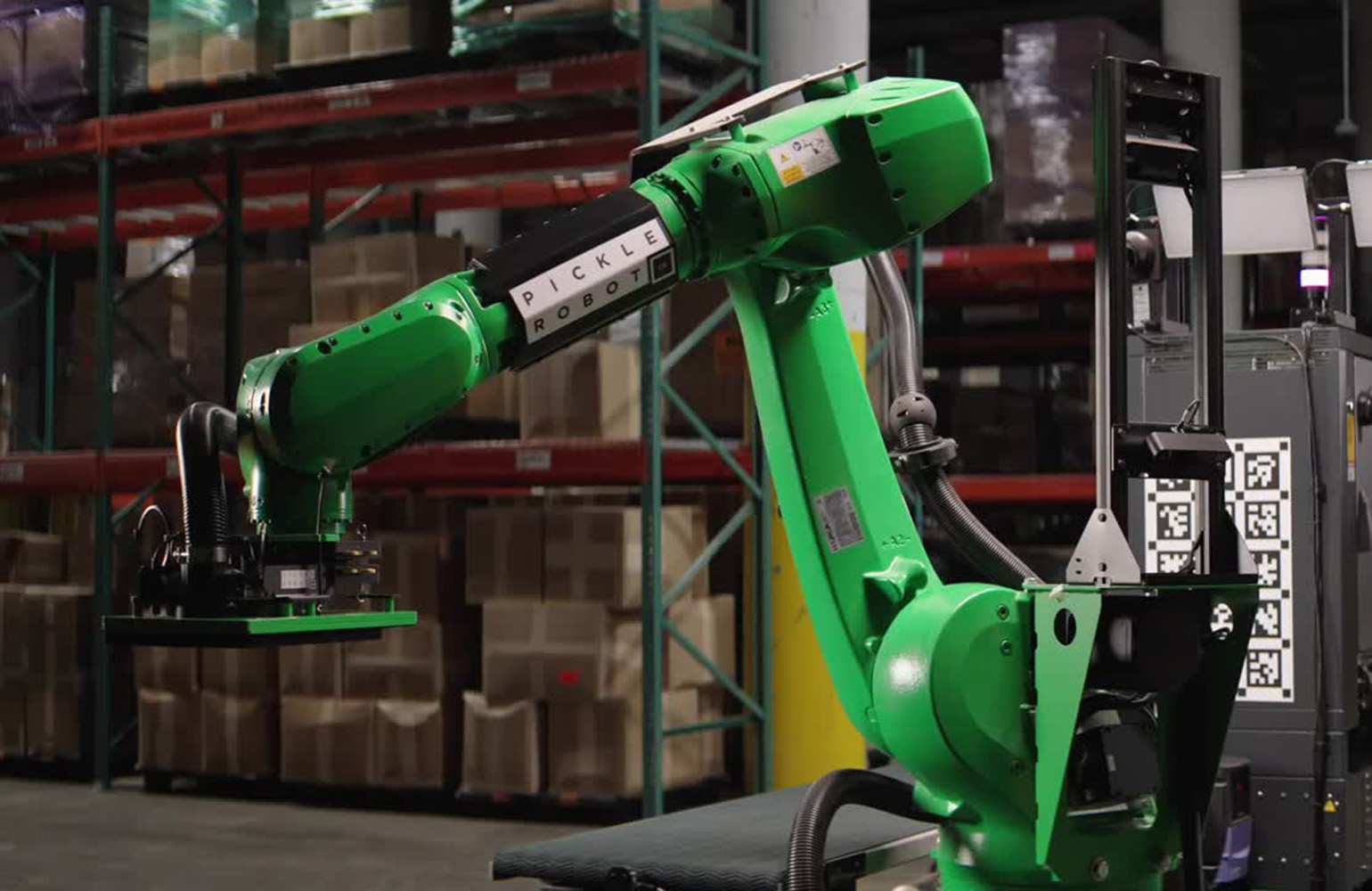
Pickle uses robotic gripping technology working in coordination with path planning to pick and place packages at human or better-than-human speed. | Source: Pickle Robot Co.
Moving robots from controlled lab settings into live customer environments exposes challenges and stress that no one can predict. At the Robotics Summit & Expo, which takes place May 27-28, 2026, in Boston, Ariana Eisenstein, the founder and CTO of Pickle Robot Co., will be sharing the company’s own learnings from bringing its truck unloading robot to workplaces.
This session, “Lessons from Taking Robots Out of the Lab and Into the Field,” breaks down the lessons Pickle learned in making warehouse robots not only reliable but also commercially viable. From hardware durability to autonomy edge cases and customer integration, Eisenstein will share the learnings from what it really takes to deploy robots that perform during shifts, day after day.
 Eisenstein is known for building and leading high-performing software and hardware teams that solve novel challenges. Her team at Pickle is leading the commercialization of physical AI, enabling robots to do physical work that delivers ROI for customers.
Prior to Pickle, Eisenstein developed an FPGA platform for testing computer vision algorithms developed in hardware at MIT and led HDL development for neuro-technology programs at Leaf Labs. Ari has a bachelor’s degree in computer science and electrical engineering and a master’s degree in computer engineering, both from MIT.
More about Pickle Robot
Charlestown, Mass.-based Pickle Robot aims to apply physical AI to truck unloading and develop generalized autonomy that will unlock robot orchestration across logistics processes.
Pickle’s trailer-unloading robots feature one robotic arm that can pick up boxes weighing up to 50 lb. (22.5 kg). The robot then places the boxes on an onboard conveyor belt for transport into the warehouse.
The company explained that it takes a “synchronized” approach to hardware and software development. This approach is built on a foundation of generative AI and machine vision. On the hardware side, the company combines advanced software with industrial robot arms and engineered components. Pickle said it uses robotic grippers with path-planning software to pick and place packages at human or better-than-human speed.
About the Robotics Summit & Expo
Registration is now open for the Robotics Summit & Expo, the world’s leading technical event for commercial robotics developers. The event is produced by The Robot Report and WTWH Media.
The show will have more than 50 sessions in tracks on artificial intelligence, design and development, enabling technologies, healthcare, and logistics. The Engineering Theater on the show floor will also feature presentations by industry experts.
More than 70 speakers are confirmed from companies such as AWS, Brain Corp, Fictiv, Harmonic Drive, maxon, PickNik Robotics, RealSense, the Robotics and AI Institute, Robust AI, Tesla, Toyota Research Institute, and more.
The Robotics Summit will also feature a number of networking opportunities. They include a Mix & Mingle Networking Reception after the first day of the show and the ticketed RBR50 Awards Dinner.
The Robotics Summit & Expo is co-located with DeviceTalks Boston, which focuses on medical devices.
The post Pickle Robot to share lessons learned from taking robots out of the lab and into the field appeared first on The Robot Report.
View Source


