Iván Hernández Dalas: Stereotaxis to acquire Robocath for up to $45M
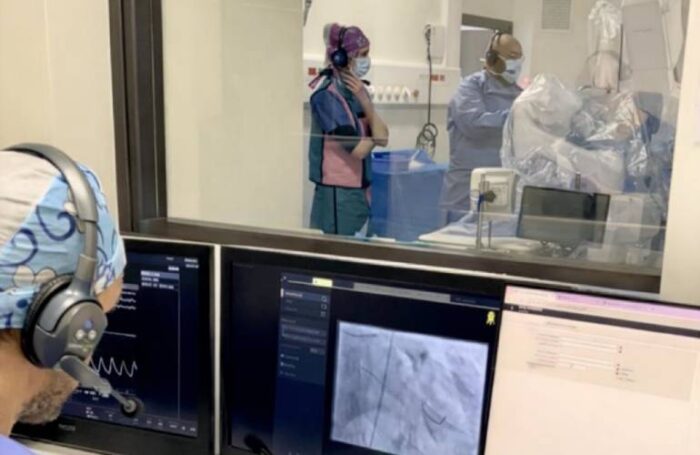
The next-generation Robocath surgical robot is in use during a first-in-human trial. Stereotaxis has agreed to acquire the technology. | Source: Robocath
Stereotaxis announced today that it agreed to acquire surgical robot developer Robocath.
The transaction includes an upfront payment of $20 million and additional contingent payments of up to $25 million tied to regulatory and commercial milestones, including FDA clearance of the company’s next-generation robotic technology.
“Robocath represents a highly strategic addition to Stereotaxis, amplifying and accelerating our strategy as the leading robotic platform for the broad spectrum of endovascular procedures. By combining our complementary robotic mechanisms, we are creating a uniquely capable platform that expands our reach across interventional medicine,” David Fischel, Stereotaxis chair and CEO, said. “This transaction accelerates our strategy, enhances our technological leadership, provides attractive commercial synergies, opens new avenues for growth, and supports other strategic opportunities being pursued by Stereotaxis.”
Rouen, France–based Robocath develops robotic technologies for interventional cardiology and neurointerventions. The company holds CE mark and other regulatory approvals for its first robotic solution, the R-One system, currently used in Europe, Africa, and China. It launched a first-in-human study for the second-generation robotic system in January.
The company’s next-generation technology integrates capabilities designed to meet the increasing demands of complex coronary procedures. It develops robotic solutions that utilize bionic technology aimed at optimizing the safety of robotic-assisted coronary angioplasty.
Robocath’s procedure revascularizes the cardiac muscle through the implantation of one or more stents to the arteries supplying blood. It designed its robotic technologies to operate with precision and perform accurate movements to create better interventional conditions. The platform enables the simultaneous manipulation of up to five interventional devices.
More about what Robocath brings to Stereotaxis
Stereotaxis says the acquisition significantly strengthens its position as “a leading platform for the full spectrum of endovascular procedures.” It combines complementary technologies to deliver next-generation, fully integrated robotic solutions. The company expects to deliver offerings for electrophysiology, interventional cardiology, and neurointerventions.
The portfolio at Stereotaxis already includes surgical robotic technology, with the next-generation magnetic GenesisX surgical robot. It’s vying for a place in the endovascular robotic space that includes Microbot Medical, XCath, Remedy Robotics, and Sentante.
According to the company, the combination of its magnetic navigation technology with Robocath’s mechanical robotic system creates a differentiated, fully robotic solution for endovascular surgery.
Stereotaxis uses precise, computer-controlled magnetic fields to enable navigation of the distal tip of interventional devices. Robocath’s platform offers multi-device control at the bedside. Together, the companies expect a synergistic approach to improving procedural precision, efficiency and outcomes.
Plans for the future

Stereotaxis said GenesisX is its most accessible robotic system to date. | Source: Stereotaxis
Stereotaxis plans to accelerate the development of the next-generation Robocath system and pursue regulatory submissions in the U.S. and Europe in the next two years. It also intends to enhance Robocath’s system with proprietary hardware and software. The company hopes to enable operating room integration, automation, and remote procedures.
Combining solutions could provide a seamless joint offering in interventional cardiology and neurointerventions initially. Then, the company plans to expand into electrophysiology.
“For over fifteen years, we have been committed to pioneering the most sophisticated plug-and-play bionic robotic technology for endovascular procedures,” Philippe Bencteux, Robocath founder and CEO, said. “Joining Stereotaxis provides the scale, complementary technologies, and strategic alignment needed to accelerate our development and expand our impact. We believe this combination will unlock significant opportunities in rapidly growing markets, which are becoming increasingly receptive to robotics.”
Stereotaxis expects approximately $2 million in revenue from Robocath in the first year post-acquisition. It anticipates the acquisition to become breakeven by the third year. The company agreed to pay the deal’s consideration in cash or common stock. It anticipates a mid-2026 close, at which point Robocath will operate as a wholly owned subsidiary.
Editor’s Note: This article was syndicated from The Robot Report’s sibling site MassDevice.
The post Stereotaxis to acquire Robocath for up to $45M appeared first on The Robot Report.
View Source


