Iván Hernández Dalas: Surgical robotics: Why motion architecture matters more than ever

By Antonio Herrera, Senior Industry Manager, Portescap
Surgical robotics has entered its most rapid era of design evolution, driven by demands for smaller form factors, greater precision, and increasingly intelligent control systems. What was once defined by a few large multi‑port platforms has expanded into a diverse ecosystem of highly specialized, procedure‑specific technologies — each pushing new technical requirements onto the motion systems at their core.
For OEMs, this accelerating complexity raises a sharper question: how to engineer platforms that deliver uncompromising performance, reliability, and scalability while staying within the limited envelopes and economic constraints of modern surgical environments?
Four key trends are currently making that question harder to answer — and are reshaping how motion architecture must be engineered.
Minimally invasive surgery keeps raising the bar
The clinical case for minimally invasive surgery is well established: smaller incisions, faster recovery times, and lower risk. What receives far less attention are the engineering challenges behind improving the robotic systems themselves.
Smaller incisions mean tighter anatomical access. Tighter access means smaller instruments. Smaller instruments mean less room for the motion components inside them — and no reduction in the performance those components must deliver.
In practice, this translates into a relentless demand for higher power density and more robust designs. High‑speed motors for surgical hand tools may run at speeds approaching 100,000 RPM, while sterilizable platforms built to endure 1,000 autoclave cycles are now considered standard. Premium systems are expected to survive 2,500 cycles without performance degradation.
AI integration demands predictability
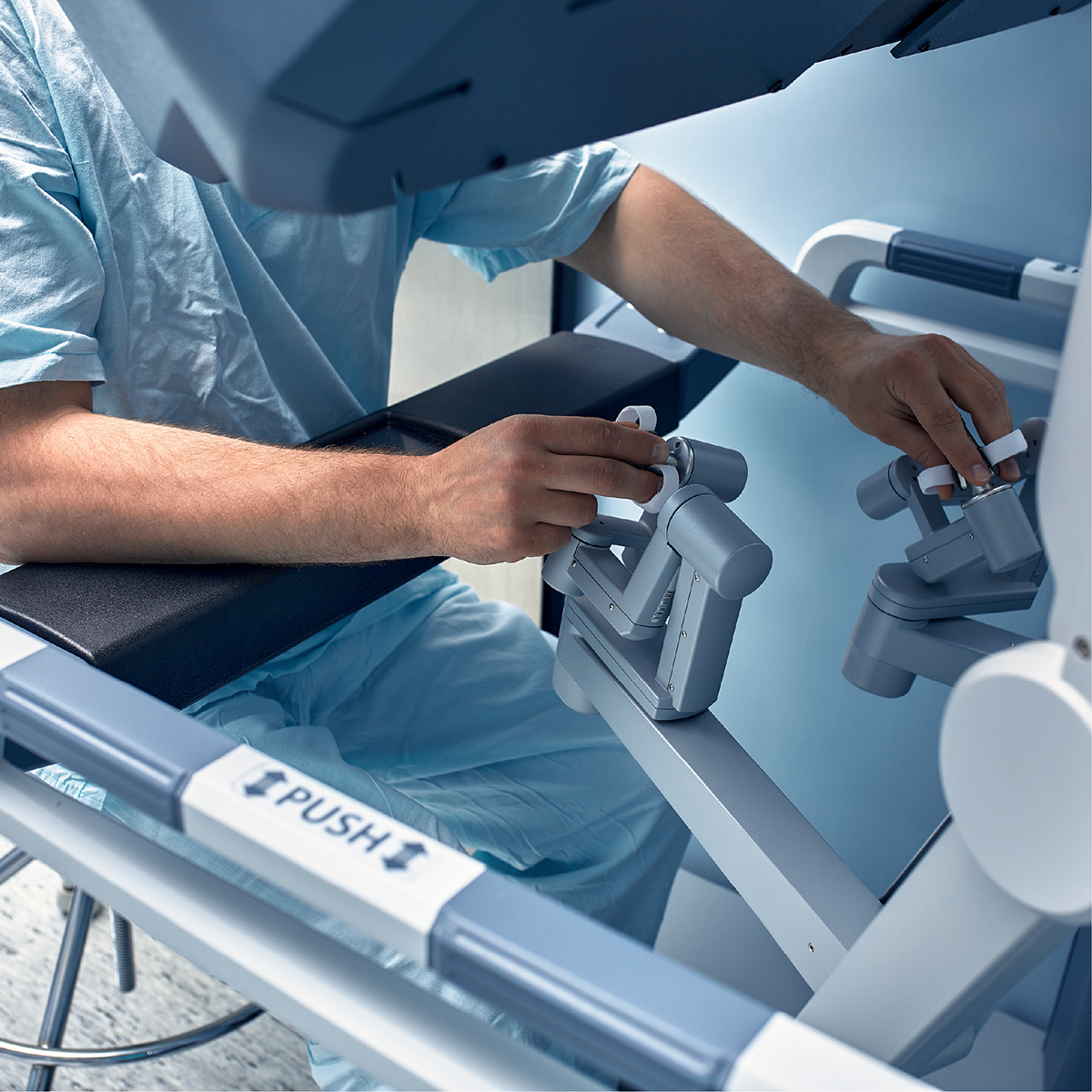
Artificial intelligence is being embedded into surgical robotic platforms at an accelerating pace — improving navigation, enhancing intraoperative visualization, and enabling real-time decision support that augments the surgeon’s confidence. The clinical promise is significant – and the engineering consequences are equally significant, though far less discussed.
AI-driven control systems are only as reliable as the physical systems they command. Algorithms that depend on smooth, predictable mechanical response cannot compensate for torque ripple, cogging, thermal drift, or inconsistent encoder feedback. As such, low-cogging, high-efficiency motors with stable thermal performance and tightly integrated feedback devices are an absolute must.
The rise of niche and procedure-specific systems
The era of surgical robotics being defined by a small number of generalist multi-port platforms is changing. Alongside those established systems, a new generation of procedure-specific and niche robotic tools is emerging: navigation platforms, and positioning systems targeting specific surgical disciplines.
Each of these platforms has its own motion requirements. An OEM building a robotic joint may need a frameless motor integrated directly into the joint structure while another axis of motion may require a compact, sterilizable motor-gearhead-encoder assembly with a controller for a handheld robotic instrument, and a lead screw-driven linear actuator for a third. The ability to source all of these from a single motion architecture — with components engineered to work together and supported by a single engineering relationship — reduces integration risk and shortens development cycles.
Broader adoption means balancing performance and cost
Surgical robotics adoption is moving beyond flagship academic centers. Teaching hospitals are expanding fellowship programs and simulation training. A generation of surgeons trained on robotic techniques is entering practice. Cost-effective platforms are opening the door to community hospitals and rural settings that could not previously justify the investment.
This is excellent news for patients, but it changes the design brief for OEMs. Platforms that once competed primarily on clinical capability now also compete on total cost of ownership, flexible and scalable operating room workflow, and supply chain simplicity. Motion components play a direct role in all three.
Efficient motor designs improve thermal performance while integrated motion subsystems simplify assembly and reduce the supplier relationships an OEM must manage. Scalable manufacturing ensures that a design validated at prototype can be delivered reliably at production volumes.
One partner across the whole platform
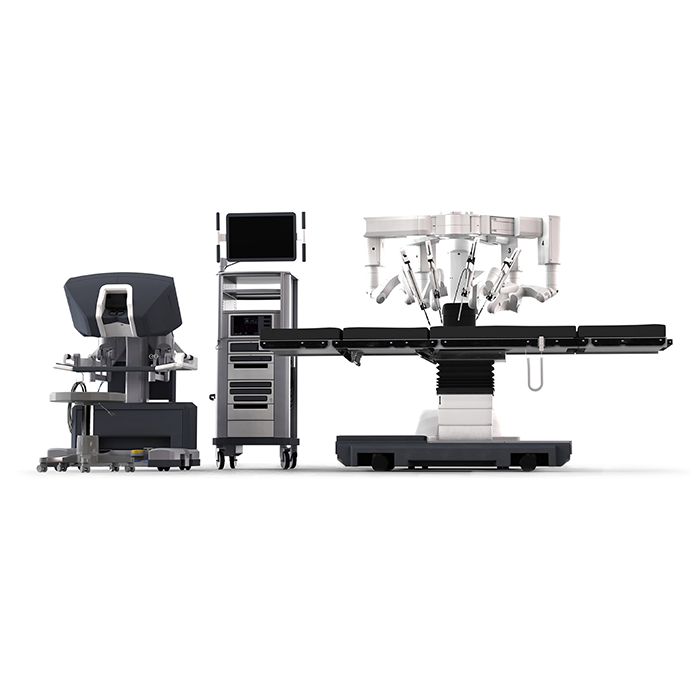 As surgical robotic platforms become more sophisticated, supplier fragmentation transitions from an annoyance to a genuine engineering liability. Every interface between independently sourced motors, gearheads, encoders, and linear systems introduces potential points of failure — and slows the rapid iteration cycles modern robotic systems demand.
Regal Rexnord addresses this head‑on. Its motion portfolio spans precision miniature motors, custom encoders, planetary and spur gearheads, linear motion systems, frameless motors, and integrated motion subsystems — all engineered to operate cohesively as part of a unified motion architecture.
The broader Regal Rexnord organization provides what a specialist motor brands alone cannot: scalable manufacturing across 16 ISO-certified global facilities, supply chain depth to support volume production, and the engineering breadth to treat the motion system as a coherent whole rather than a collection of separately sourced components.
For OEMs, this means fewer supplier relationships to manage, lower integration risk at component interfaces, faster iteration through the development cycle, and a motion partner who can stay engaged from initial concept through to scalable manufacturing. The platforms that will define the next decade of surgical robotics will be built on unified, scalable motion architectures — and the partners capable of delivering them.
Explore how Regal Rexnord can accelerate your next surgical robotic platform here.
Sponsored content by Portescap
The post Surgical robotics: Why motion architecture matters more than ever appeared first on The Robot Report.
View Source


