Iván Hernández Dalas: Voyager Technologies acquires Astrobotic to advance lunar initiatives
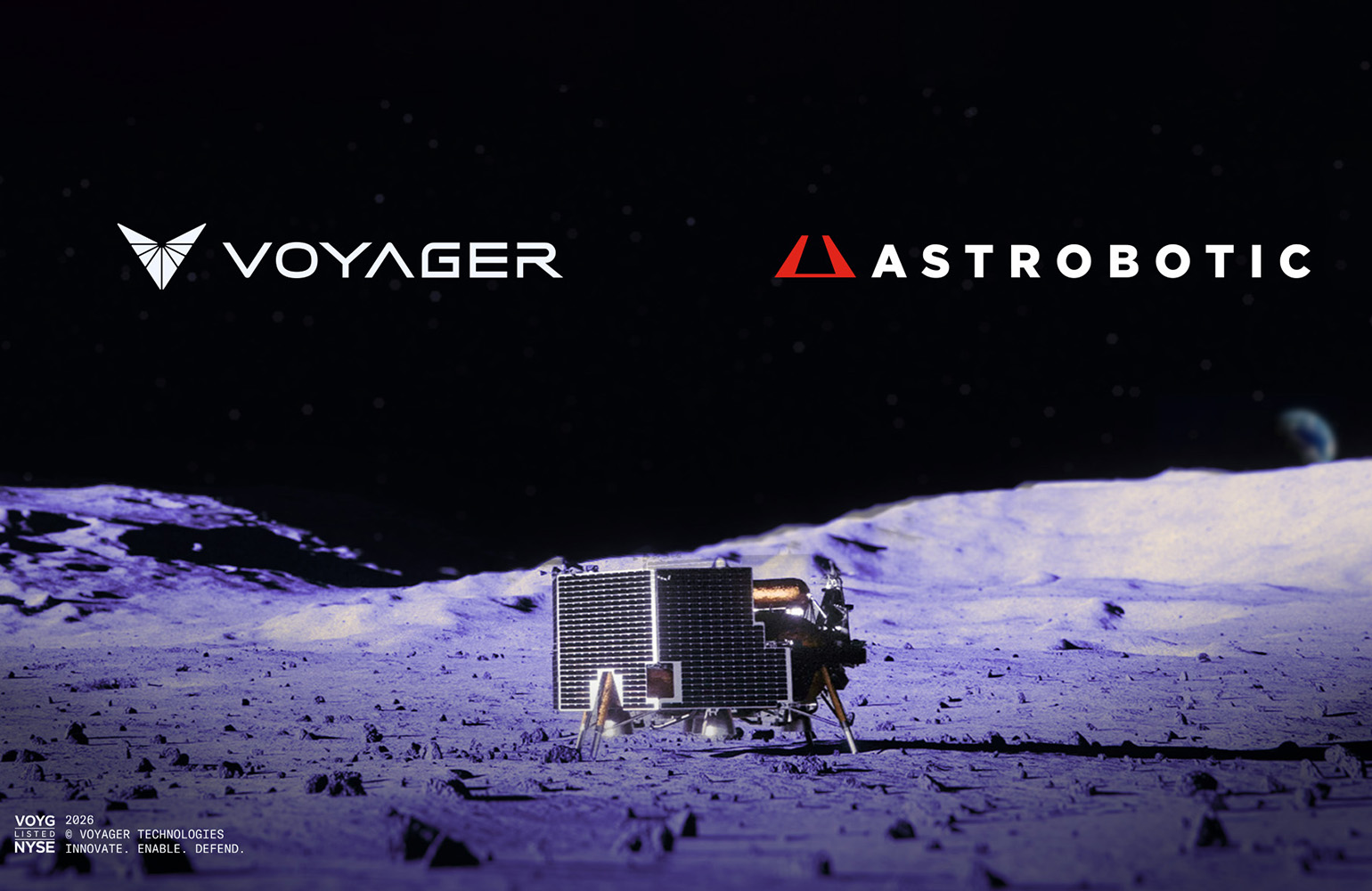
Voyager is a defense technology and provider of mission‑ready systems for space. | Source: Voyager Technologies
Voyager Technologies this week entered into an agreement to acquire Astrobotic Technology Inc. Pittsburgh-based Astrobotic provides commercial lunar delivery, lunar power, and reusable rocketry.
Under the agreement, Astrobotic will become a core pillar of Voyager’s strategic lunar initiative, providing the hardware, systems, and operational capabilities required to land on the moon, sustain life there, and perform critical work on the surface. The transaction marks a major milestone in Astrobotic’s nearly two‑decade mission to make the moon accessible and to build the infrastructure needed for a continuous U.S. presence on the lunar surface.
“From Day 1, Astrobotic set out to prove that commercial companies can deliver to the lunar surface,” stated John Thornton, CEO of Astrobotic. “Joining Voyager provides the scale, resources, and long-term commitment our mission calls for. Our team, our technology, and our homes in Pittsburgh and Mojave remain at the center of what we’re building. Together with Voyager, we can accelerate the timeline for establishing America’s moon base.”
Denver-based Voyager said it intends to invest in scaling Astrobotic’s lunar and reusable rocket programs. These are key elements needed to support NASA‘s Artemis program and Administrator Jared Isaacman’s goal of a permanent U.S. presence on the moon by 2028, said the company.
Voyager to continue Astrobotic’s existing contracts
With the acquisition, Voyager said it will become a lunar platform, with capabilities that span the full arc of lunar operations, including:
- Mission management, communications, and propulsion
- Surface delivery through Astrobotic’s Peregrine and Griffin landers
- Surface power via Astrobotic’s LunaGrid solar distribution system
- Long‑duration habitation through Voyager’s investment in Max Space
- Dust mitigation with Voyager’s clear‑dust repellent coating
- In‑situ resource utilization technologies
Astrobotic’s Moon Base headquarters in Pittsburgh will become the center of Voyager’s strategic lunar initiative. Griffin Mission One, Astrobotic’s mission to bring several payloads to the moon, including two rovers, will continue on schedule.
Upon closure of the transaction, Astrobotic’s full portfolio will transition under Voyager while maintaining operational stability and leadership continuity.
Founded in 2007, Astrobotic has secured more than $600 million in NASA and defense contracts and launched America’s first commercial lunar lander into space. The company develops landers, rovers, lunar power infrastructure, and reusable rockets.
What role will robots play in Voyager’s moon ambitions?
Both Voyager and Astrobotic have worked with robotics developers to get more robots operating in space. Most recently, Voyager entered into a mission management contract with Icarus Robotics to test the startup’s free-flying Joy robot on the International Space Station (ISS) in 2027.
Voyager operates the only commercial airlock onboard the ISS. Under the agreement, the company will oversee payload integration, safety certification, launch coordination, on-orbit operations planning, and real-time mission execution support.
At the time, Scott Rodriguez, the vice president of government programs at Voyager, told The Robot Report that Voyager is interested in helping “anyone and everyone get to space, if we can.”
Rodriguez noted that there are many opportunities for robots to do work in space, including in satellite servicing and building infrastructure for bases on the Moon or Mars. “You just can’t build all that with human labor. It’s going to have to be robotically driven to a degree,” he said.
The transaction is subject to customary regulatory approvals and is expected to close by early July 2026.
The post Voyager Technologies acquires Astrobotic to advance lunar initiatives appeared first on The Robot Report.
View Source


